
In 2026, Mikołaj Pociecha claimed the Dutch Brewers Cup title with a routine rooted in thoughtfulness, precision, and a deep respect for diversity of expression. Rather than chasing spectacle, Mikołaj used the competition as a platform to reflect on how ideas, people, and decisions shape flavour, even when working with the same variety grown under the same conditions.
We spoke with Mikołaj about his approach to competition, the role of water in his routine, and how APAX LAB helped him capture the most delicate and fleeting aspects of his winning cup.
Tell us more about the Brewers Cup — what makes this competition special to you and why you decided to compete this year?
Brewers Cup, to me, is a special moment. It is a snapshot of who you are, how you view your craft, and how you relate to others through your attitude. This year I competed specifically to celebrate the diversity of ideas among people. We chose the same variety, grown in the same region and at identical elevation, but produced by two very different people with wildly different flavour profiles to illustrate that. The same thing can be interpreted in so many ways, and yet it can coexist in harmony. I wanted to celebrate that.
Water quality is crucial in brewing — how did it impact your approach to the competition?
Water is incredibly important. It shapes how we taste and the quality of the experience we have. This time, the water needed to capture the fragile complexity of the aromas and preserve them — that was the most crucial part. The profile we aimed for was based entirely on perceiving a very fleeting lactic quality that wasn’t always present depending on the water profile. Beyond that, it needed to support a complex texture that evolved from silky to smooth and juicy, and finally tea-like at the finish. A well-made and stable water recipe removes a lot of guesswork and brings confidence to any brewing approach.
How did you first hear about APAX LAB, and what made you choose our products to craft your competition water?
Calico in London convinced me of APAX as my go-to choice for competition. They profiled water for each of their coffees, and the format of mineral “cocktails” consistently produced exceptional results with mind-blowing aroma quality.
In what ways did the mineral concentrates help you achieve the best expression of your coffee and contribute to your win?
I have to mention aroma quality again — the quality of aroma using APAX is unparalleled. The ratios at which the concentrates are formulated also allowed me to pinpoint the sweet spot very easily, making the process essentially stress-free. As a competitor, all I’m looking for are tools and ingredients that behave consistently every time, and the concentrates do exactly that.
Which APAX LAB profile is your favourite, and why?
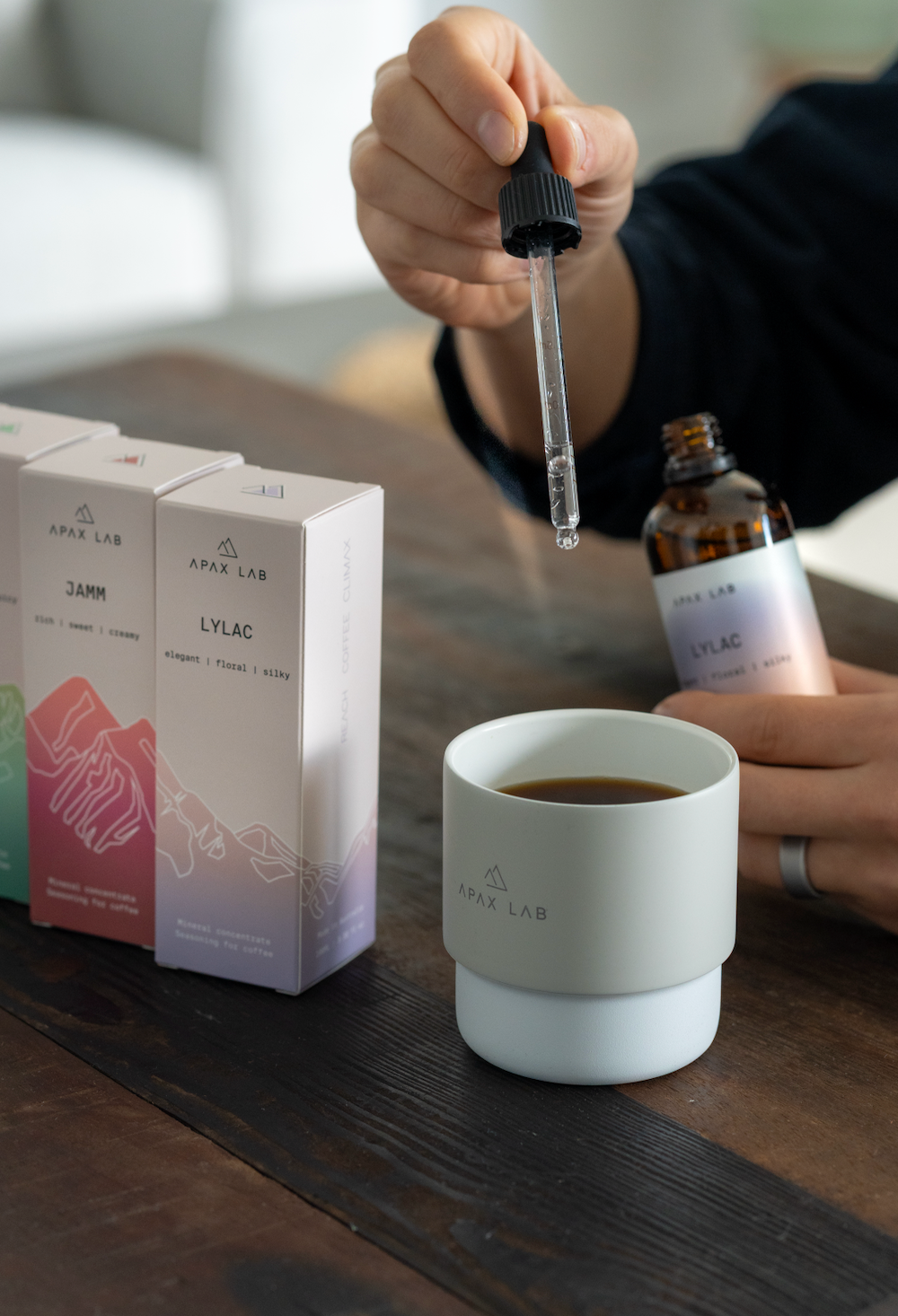
I have a soft spot for LYLAC. It’s usually my go-to concentrate, which I then tune with extra calcium or magnesium depending on the coffee. LYLAC preserves very fragile and elegant qualities while rounding off edges. It works beautifully with elegant washed coffees and highlights their defining features.
What coffee did you choose for your competition routine, and why was it the perfect fit for your approach?
I used a blend of two Geshas by Diego Bermudez and Wilder Lazo. They were grown in the same region at identical elevation, yet showed very different flavour profiles. I think this beautifully showcased the importance of ideas in shaping the final cup, and how producers actively interact with variety and terroir to express themselves.
What was your winning water recipe with APAX LAB, and how did it influence the final cup?
My recipe was 18 drops of LYLAC per 1 litre of low-ppm mineral water (33 ppm), supplemented with 20 ppm of additional calcium. The result was an aroma-driven cup with an extremely smooth texture that supported both acidity and sweetness.
What is your motto, or favourite quote when it comes to coffee competition?
Whatever you do, make it beautiful. I enjoy technicality, gear, and precision, but these things also have the potential to alienate people from our craft. A great competition routine is one that people remember for the context surrounding it.
For those new to crafting their own water for filter coffee, what advice would you give them?
Don’t start with 0 ppm unless you’re demineralising very high-quality mineral water. “Dead” water often lacks depth and vibrancy. I like starting with a low-ppm water like Spa Blå at 33 ppm and then building on top of it. It makes a significant difference and isn’t much hassle.
Conclusion
Mikołaj Pociecha’s Dutch Brewers Cup win is a reminder that competition is not just about technique, but about intention and perspective. By using water to preserve fleeting aromatics, support evolving texture, and honour diversity of expression, he delivered a routine that was both technically refined and deeply human. We’re proud to have supported his journey with APAX LAB and honoured to welcome Mikołaj Pociecha, Dutch Brewers Cup Champion 2026, into our Hall of Fame.