
Winning once can change the way you see competition.
Winning four times creates a different question altogether: what does improvement look like when you already know how to win?
For Elysia Tan, the answer is not to repeat what worked before.
Competition remains a way to keep developing technically, question familiar habits and pay closer attention to details she might once have overlooked.
That approach shaped her fourth Singapore Brewers Cup title. For her 2026 routine, Elysia chose Finca Sophia Lot 100, a washed Panama Geisha, building the cup around its florality, muscat-like sweetness, elegance and silky texture.
Her water followed the same principle: begin with a clear sensory goal, then build the mineral profile around the coffee.
We spoke with Elysia about what keeps bringing her back after four national titles, how her brewing has become increasingly analytical, and what success means to her now.
1. Winning the Singapore Brewers Cup for the fourth time is an incredible achievement. What keeps bringing you back to competition, and what made this year’s victory feel different from the previous three?
The constant pursuit of improvement is what drives me.
When work gets busy, it is easy to let the technical side of coffee slide. Competition forces me to stay focused on that, and to keep pushing for better cup quality. It makes me ask how I can improve the cup and the overall experience for my guests.
This year was tough because I had COVID.
I could barely taste my compulsory coffee, and during my open service I could taste almost nothing at all. That was uncomfortable because it felt like serving a customer a coffee I had never calibrated. I was definitely less confident on stage.
Honestly, I was surprised I won.
I made a few mistakes up there, and I had such a bad fever that I do not remember much of the day. What I do remember is bursting into tears when they announced my name, because I really was not expecting it.

2. Across four championship-winning routines, how has your approach to brewing evolved? Was there anything you approached differently this year?
Experience has taught me to start earlier and to pay attention to details I would never have looked at before.
In the beginning, I simply sourced a coffee I enjoyed drinking and served it.
Now I monitor things like moisture content and density. More data points give me more control, and more control means I walk on stage better prepared.
3. You’ll be representing Singapore on the world stage once again next year. What lessons from your previous World Brewers Cup experience are you bringing into this next chapter?
At the 2025 World Brewers Cup in Jakarta, I received the lowest compulsory score in the field. I made a judgement on the coffee too quickly, and that was a hard lesson.
Now I take the extra steps.
I look at details I used to skip, and I let the data guide my decisions rather than my first impression. Becoming more analytical about brewing has genuinely made me a better brewer.

4. Water has been part of your competition journey for some time. How has your understanding and use of water evolved as you’ve become a more experienced competitor?
Filter coffee is about 98% water, so water is everything. This becomes obvious when you travel to brew, because the water is different everywhere you go.
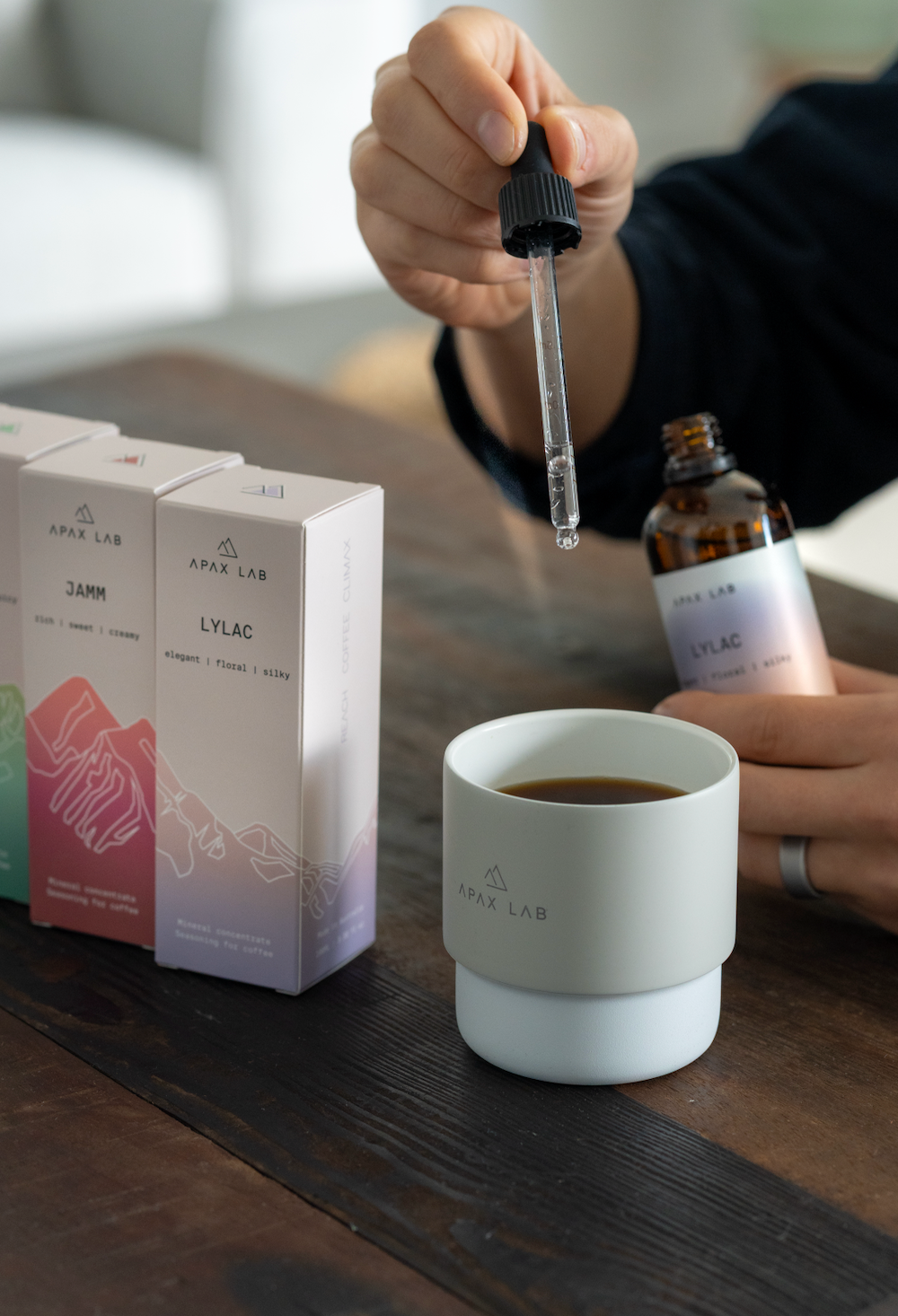
I have spoken to Simon, co-founder of APAX LAB, a number of times about working with different minerals, and he has been incredibly generous with his knowledge. He taught me a systematic way to use APAX to find the right profile for a specific coffee.
There is no single formula that fits every coffee.
It starts with a goal. You need to picture how you want the coffee to taste before you touch the water, and then build a mineral profile that gets you there.
That intention is the most important part of creating a water profile.
5. What coffee did you choose for this year’s winning routine, and what qualities made it the right coffee for the experience you wanted to create?
I went with Finca Sophia Lot 100, a washed Panama Geisha.
I was nervous because I had never competed with a washed coffee alone. But it is Finca Sophia, so you can imagine the level of florality in the cup, with a sweetness that reminded me of muscat grapes.
Elegant and silky is how I would sum up the whole experience. A cup that lingers is what a guest or a judge remembers long after the service ends, and Sophia is exactly that cup.

6. What was your winning APAX LAB water recipe, and how did each profile help shape the coffee’s sweetness, acidity, texture, clarity, or overall expression?
I used:
That combination lifted the sweetness and supported the floral character I wanted to showcase in the Finca Sophia.
7. Is there an APAX LAB profile you find yourself returning to most often? What does it bring to a coffee that you particularly enjoy?
It really depends.
I also used APAX in Jakarta in 2025, and that was a completely different profile from the one I competed with this year.
It comes down to the coffee in front of you and the character you want to bring forward. That versatility is exactly why APAX keeps finding its way back into my competition routines.
8. After four national titles, has your definition of a successful competition changed? What does success mean to you now beyond winning?
The pressure gets heavier each time.
I feel the need to outdo my previous self, otherwise it feels like my skills have stood still. So for me, success is still about constant improvement.
But success also means passing things on. Sharing skills, knowledge and experience with the next group of competitors is how the industry keeps growing, and that matters just as much as the result on the day.

9. For competitors hoping to grow year after year, what have four championship journeys taught you that you wish you had known when you first started?
Mindset comes before everything else.
Trust yourself.
Coffee will not taste great every single day, and you will not hit 100% every time you brew. That is normal, because coffee changes over time.
What you can do is collect the data, then use it to show the coffee at its best.
Final Thoughts
Four national titles might suggest that Elysia Tan has found a formula that works.
Her approach suggests almost the opposite.
The longer she competes, the more closely she looks — questioning assumptions, gathering more information and building each routine around the coffee in front of her rather than repeating what worked before.
That same philosophy shapes her approach to water. There is no fixed profile to return to; the starting point is always the coffee and the sensory experience she wants to create.
This year, that meant Finca Sophia Lot 100: floral, elegant, silky and memorable.
But perhaps the clearest sign of Elysia’s evolution comes in how she now defines success. Improvement still matters, but after four championship journeys, so does passing what she has learned on to the next generation of competitors.
Congratulations to Elysia Tan, the 2026 Singapore Brewers Cup Champion! We are proud to have APAX LAB remain part of her competition journey, and excited to see where that pursuit of improvement takes her next.