
Ivan Bilousov’s relationship with the cezve/ibrik began long before competition.
His first experience with the brewing method came through coffee prepared by his grandmother, the person he credits with introducing him to coffee itself.
Years later, that same method sits at the centre of his work as the 2026 Ukrainian Cezve/Ibrik Champion and of a much broader curiosity about what traditional coffee preparation can become when explored through experimentation, science and technology.
Over the past four years, Ivan has developed his own approaches to cezve/ibrik, studying how brewing variables influence the cup and how modern knowledge can expand the possibilities of a method with deep cultural roots.
That philosophy shaped his 2026 winning routine.
Working with Floral Symphony, a Colombian Geisha from Lohas Beans produced by Nestor and Adriano Lasso in Huila, Ivan built his recipe around preserving its floral aromatics and vibrant fruity acidity while developing sweetness, texture and an elegant finish.
Water was one of the tools he used to get there.
We spoke with Ivan about the method that first introduced him to coffee, the science behind his approach, his winning APAX LAB water recipe, and why curiosity remains at the centre of everything he does.
1. Tell us more about Ibrik. What is it, and what inspired you to compete in Ibrik this year?
For me, cezve/ibrik is one of the most underrated coffee brewing methods in the world.
My love for it began in childhood, when I tasted coffee prepared by my grandmother for the very first time. She was the person who introduced me to the wonderful world of coffee, and that passion has stayed with me ever since.
Cezve, also known as ibrik, is one of the oldest coffee preparation methods in the world. Across many countries and cultures, it is deeply connected to traditions, rituals, and hospitality.
Coffee is prepared in a special vessel, traditionally made from copper, silver, or other materials. Very finely ground coffee is combined with water and gradually heated, typically reaching around 92–95°C, depending on the brewing technique.
As the temperature rises, a characteristic layer of crema begins to form and rise towards the top of the vessel. At this point, we remove the cezve from the heat and pour the coffee into a cup.
And then something fascinating happens: extraction continues directly in the cup, without any further intervention. Over the next 3–5 minutes, the coffee particles gradually settle, and the beverage cools to a comfortable drinking temperature.
What makes cezve/ibrik particularly exciting to me is its unique sensory profile.
I like to describe it as something between espresso and filter coffee. It can be lighter than espresso while offering a fuller body than filter coffee. I believe this brewing method has incredible potential to express the character, terroir, and complexity of specialty coffee in a completely different way.
My motivation for competing goes far beyond demonstrating my skills as a barista. I want to introduce new ideas and innovations that can improve the experience of drinking cezve/ibrik coffee. I have spent the last four years working on my own developments and exploring how traditional brewing techniques can be combined with modern science and technology.
One of my big dreams is to travel around the world, sharing this knowledge and showing people just how extraordinary coffee prepared in a cezve or ibrik can taste.

2. Does water play as big of a role in Ibrik as it does for filter coffee?
An incredibly important role!
I genuinely believe that water is one of the most important ingredients in coffee preparation, second only to the coffee itself, regardless of the brewing method.
For me, water is much more than simply a solvent. Its mineral composition can influence the sensory characteristics of the final beverage, including how we perceive acidity, sweetness, bitterness and complexity.
For example, water with excessive alkalinity can mute bright, fruity acidity and make a coffee taste less expressive.
That is why I strongly believe there is no universal water recipe that works perfectly for every coffee and every brewing method.
Cezve/ibrik makes this particularly interesting. Unlike filter coffee, where water passes through a bed of ground coffee, in cezve brewing the water and coffee are heated together, creating a very different brewing environment.
For me, working with water is therefore about much more than following recommended parameters for hardness, alkalinity or pH. It is an opportunity to intentionally shape the sensory balance of the beverage and highlight the unique characteristics of a particular coffee.
I like to think of water as another instrument in a barista’s hands.
Even the best coffee in the world may never reveal its true potential if we do not pay enough attention to the water we use to brew it.
3. How did you first hear about us, and why did you decide to use APAX LAB to make your water for the competition?
I first discovered APAX LAB through my friends, and I honestly fell in love with the product at first sight!
Everything impressed me, from the thoughtfully designed packaging to the attention to detail, including the printed instructions and recommendations.
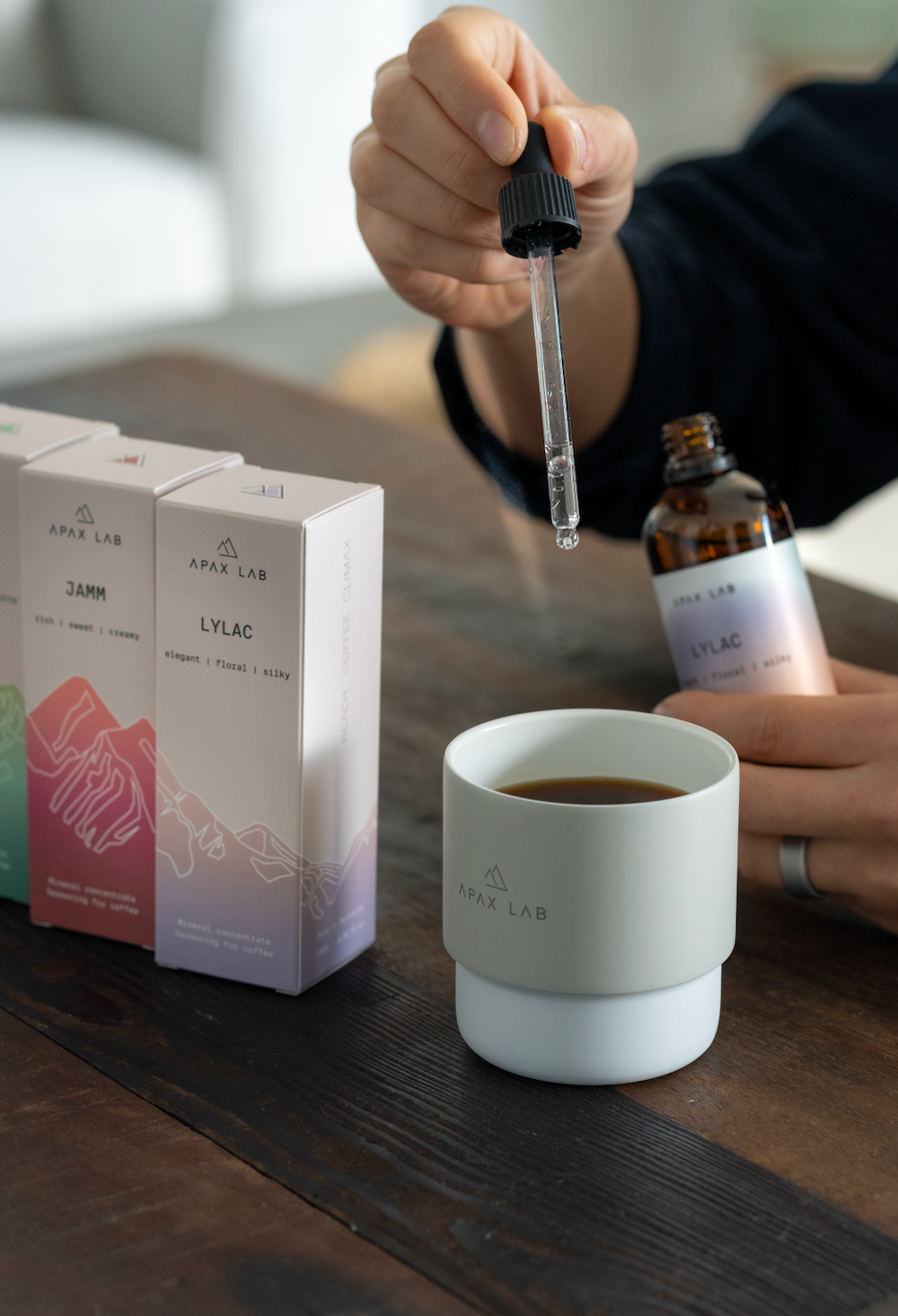
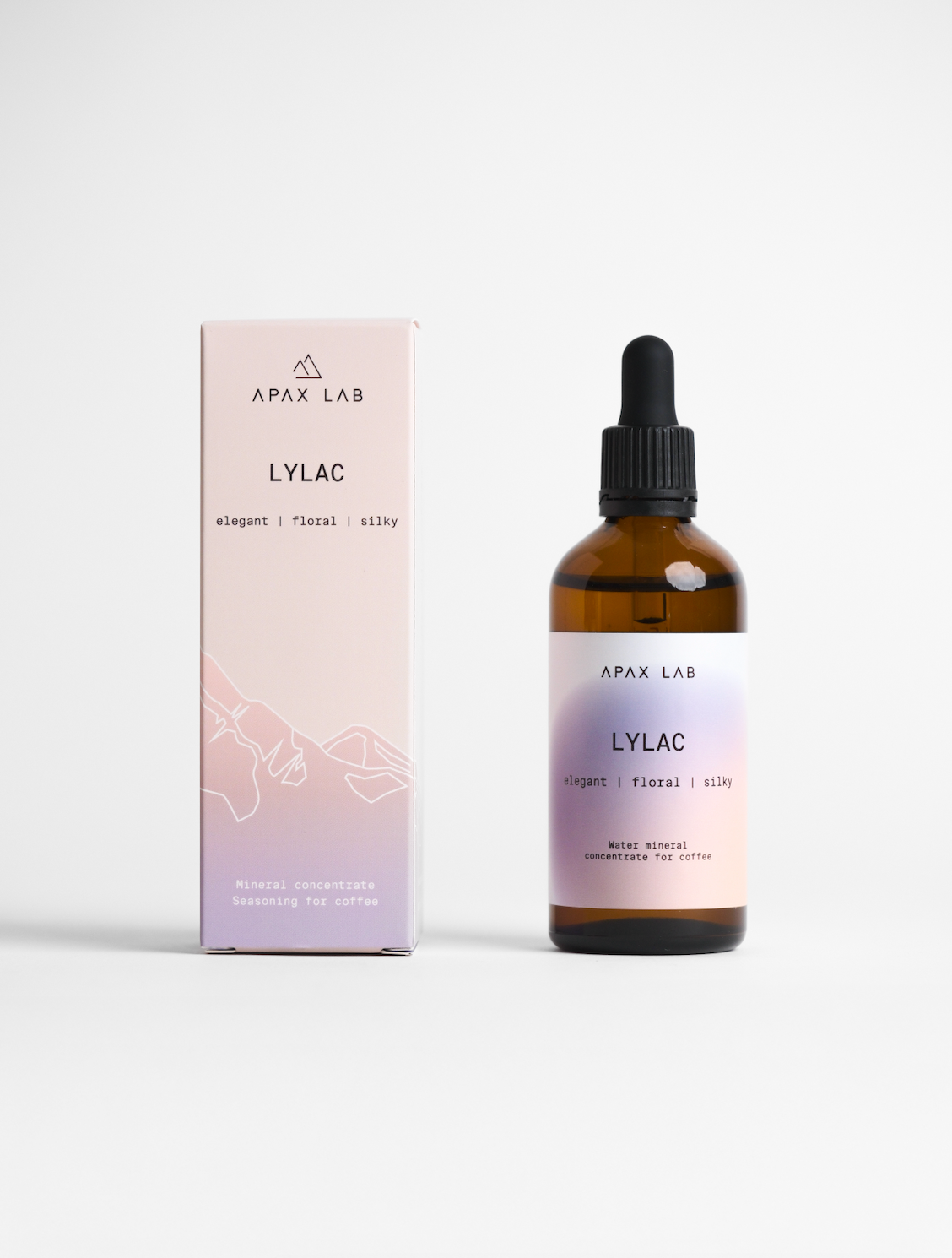
For cezve/ibrik brewing, I most frequently work with JAMM, LYLAC, and KONFLUX, experimenting with different combinations and proportions.
The convenient dosing dropper allows me to control the amount of each concentrate with great precision, develop my own water recipes, and discover entirely new dimensions of flavour, even in coffees I already know very well.
When preparing for competitions, I usually start with distilled water and conduct a series of experiments using different mineral concentrations and ratios.
I typically explore TDS readings between 40 and 150 ppm, compare the sensory results, and gradually identify the water composition that works best for my competition coffee.
That flexibility is exactly what I love most about APAX LAB.
Instead of adapting my coffee to a fixed water composition, I can design the water around the specific characteristics of the coffee I want to present.
As a barista who constantly explores new ways of expressing coffee’s potential, that freedom is incredibly valuable.

4. How did APAX LAB help you shape your competition water and final cup?
During my competition preparation, I worked with an extraordinary Colombian Geisha with a very delicate and complex sensory profile.
My goal was not simply to maximise flavour intensity. I wanted to preserve its elegant floral aromatics, highlight its vibrant fruity acidity, and create a harmonious balance of sweetness, texture and aftertaste.
This is where APAX LAB became an incredibly valuable tool.
Being able to adjust the proportions of different mineral concentrates allowed me to experiment not only with the overall mineral concentration of my water, but also with its composition.
Two waters with identical TDS readings can have very different mineral compositions and produce noticeably different sensory experiences. By experimenting with different combinations of APAX LAB concentrates, I gradually developed a water recipe that complemented both the character of the coffee and the sensory concept of my competition routine.
Another major advantage was reproducibility. In a competition environment, where every small detail matters, being able to recreate the same water recipe helps remove one variable from the process.
Of course, winning a championship is the result of countless hours of work with coffee selection, roasting, equipment, brewing techniques and many other details.
But APAX LAB allowed me to approach water with the same level of precision and intention as every other part of my performance. And to me, that is what innovation is all about: moving beyond the idea that water is a fixed ingredient and beginning to use it as a tool to reveal the full potential of coffee.
5. What is your favourite APAX LAB profile, and why?
Honestly, choosing just one profile is almost impossible for me, because what I enjoy most is experimenting!
The real value of APAX LAB, in my opinion, lies in the ability to combine different mineral concentrates, adjust their proportions, and create a customised water recipe for each individual coffee.
However, if I had to choose a starting point, it would definitely be JAMM. From my own sensory experience, JAMM works beautifully with cezve/ibrik brewing. I find that it helps create a rounder, more pleasant body while highlighting the coffee’s natural sweetness.
But the really exciting part begins when I combine JAMM with LYLAC or KONFLUX.
Even small adjustments to their proportions can noticeably change the way we perceive a coffee, allowing me to find the balance that best expresses the character of a particular bean.
So perhaps my favourite APAX LAB profile isn’t a single concentrate at all. It’s the freedom to create something unique by combining them!

6. What was your winning water recipe with APAX LAB? And what coffee did you use it with?
For my winning competition recipe, I used a combination of two APAX LAB mineral profiles: JAMM and LYLAC in a 1:1 ratio.
For 1 litre of distilled water, the recipe was approximately:
-
JAMM: 1.835 g — around 27–28 drops
-
LYLAC: 1.835 g — around 27–28 drops
-
Total mineral concentrate: approximately 3.67 g
-
Target water TDS: 110 ppm
I paired this water with a beautiful Colombian Geisha from Lohas Beans called Floral Symphony, produced by Nestor and Adriano Lasso in Huila, Colombia.
The coffee underwent a complex processing method involving anaerobic fermentation and the use of coffee mosto, resulting in a remarkably expressive floral profile, complex aromatics, and vibrant fruity acidity.
My goal was to preserve the delicacy of its floral notes, highlight its natural sweetness, and create a round, silky mouthfeel.
That is why I chose JAMM, which in my experiments helped emphasise sweetness and texture, together with LYLAC, which I used to support the floral characteristics and the elegance of the finish.
My cezve/ibrik brewing recipe was relatively simple:
-
Coffee dose: 8 g
-
Water: 60 g
-
Brew ratio: 1:7.5
-
Total brewing time: approximately 2 minutes 30 seconds to 3 minutes
For me, it was essential that every element of the recipe worked together, from the coffee’s characteristics and grind size to the mineral composition of the water and the brewing time.
This comprehensive approach helped me create a cup that reflected the sensory concept I wanted to present on the competition stage.
7. Finally, what piece of advice would you give to someone who is just getting started with Ibrik and making their own water?
First of all, I would recommend investing in a well-made cezve or ibrik, preferably made from copper or silver. It should provide even heating and a stable, predictable brewing experience. This is one of the foundations of consistent results.
The next step is choosing good coffee and the right water.
For your first experience with cezve/ibrik, I recommend starting with high-quality specialty coffee with a clean, easy-to-understand sensory profile, such as a washed or naturally processed coffee.
When it comes to water, don’t be afraid to experiment with APAX LAB mineral concentrates! As a starting point, I would suggest exploring water with TDS readings between 60 and 120 ppm.
All you need is distilled water, APAX LAB concentrates, and a portable TDS meter to help monitor the approximate mineral concentration of your prepared water.
Try brewing the same coffee with different mineral combinations. You might be surprised by how dramatically its sensory characteristics can change!
Next comes the brewing recipe, and this is where beginners often make mistakes.
First, the grind size.
For traditional cezve/ibrik brewing, the coffee should be ground extremely fine, even finer than espresso.
Second, the brew ratio.
I recommend starting with a simple 1:10 ratio, meaning 10 g of coffee for every 100 g of water.
From there, you can experiment anywhere between 1:7 and 1:13 to find the intensity, texture, and flavour balance that suit your preferences.
The brewing process itself can be quite simple.
Add the coffee and water to your cezve, begin heating, and stir thoroughly to ensure everything is evenly combined. Watch the surface carefully. As soon as the crema begins to rise, remove the cezve from the heat and pour the entire beverage into a single cup.
Allow it to rest for approximately 3–5 minutes so the coffee particles can settle and the temperature becomes comfortable for drinking.
And now, enjoy your coffee!
Of course, there are many more details to explore. Temperature, heating rate, vessel geometry, grind size, and water chemistry can all influence the final result. But I often notice that people discovering a new brewing method simply need a clear starting point.
That is exactly what I want to offer.
My most important advice is to stay curious and never be afraid to experiment. You don’t have to brew the perfect cup on your first attempt.
But with every new cezve or ibrik you prepare, you will understand the process a little better and gradually create a more delicious, complex, and expressive cup. For me, that is the magic of coffee: there is always something new to discover.

8. What is your motto or favourite quote in relation to coffee competitions?
My personal motto is quite simple: always remain open to new knowledge, stay curious, and never stop growing.
I genuinely believe that education doesn’t end when you receive a diploma or win a professional title.
That is why I am currently studying food technology at Chernivtsi National University in Ukraine, focusing particularly on the study and examination of products derived from subtropical raw materials, including coffee, tea, and cocoa.
For me, it is an opportunity to combine years of practical barista experience with a scientific approach, gain a deeper understanding of chemical and technological processes, and apply that knowledge to my own research and innovations.
When it comes to coffee competitions, I have always seen them as something much bigger than simply competing for a title. To me, they are unique platforms where we can present the results of our research, exchange knowledge with professionals from around the world, introduce innovations, and even influence the future direction of the coffee industry.
I choose to step onto the competition stage when I genuinely feel that I have something meaningful to share. When there is more behind my performance than simply a desire to win — an idea, a research project, or a technology that could potentially benefit the wider coffee community.
For me, competitions are not about one event, one performance, or one trophy. They are about continuous learning, personal growth, and a journey that I believe will last my entire life.
At the same time, I consider it incredibly important not only to receive support and inspiration from the coffee community, but also to give something back.
That is why I volunteer at national coffee championships and have also had the honour of working as a calibration barista at two World Coffee Championships. Those experiences are just as meaningful to me as competing on stage myself.
And perhaps one of my greatest professional dreams is to change the way people perceive cezve/ibrik brewing.
I want people to stop seeing it exclusively as something from the past and start discovering it as a modern, exciting, and incredibly versatile way of brewing coffee. I truly believe that even the oldest traditions can become the foundation for the boldest innovations.
If I had to summarise my philosophy in one sentence, it would be:
“Stay curious, never stop learning, and use your knowledge to make a difference in the world around you.”

9. Anything else you’d like to add?
I am incredibly excited about the upcoming World Championship! I cannot wait to step onto the international stage, share my new competition routine, and reveal some of the ideas and innovations I have been preparing.
For me, representing Ukraine on the World stage is both a tremendous honour and a responsibility. It is an opportunity to share not only my own work, but also the passion, creativity and resilience of the Ukrainian coffee community.
Looking further into the future, one of my biggest ambitions is to help people discover the possibilities that still exist within cezve/ibrik and how this historic brewing method can continue to evolve through science, innovation and creativity.
Its story is far from over.
And I sincerely hope that one day I will have the opportunity to share a beautiful cup of cezve/ibrik coffee with the APAX LAB team in person.

Final Thoughts
Ivan’s championship story begins with tradition, but it is driven by curiosity.
The method his grandmother first used to introduce him to coffee has since become something he studies from almost every angle: sensory experience, technique, water, equipment and the science behind them.
For Ivan, those ideas are not in conflict with tradition. They are a way of continuing it.
His 2026 winning routine reflects that philosophy. A Colombian Geisha, a deliberately designed water profile and a cezve recipe were treated as interconnected parts of one sensory concept rather than independent variables.
And the national title does not appear to have answered Ivan’s questions.
If anything, it has given him another place from which to ask more of them.
Now, as the 2026 Ukrainian Cezve/Ibrik Champion, Ivan will bring that work to the World stage — representing Ukraine while continuing to explore how modern knowledge can expand the possibilities of one of coffee’s oldest brewing traditions.
Congratulations to Ivan Bilousov on the national title. We are proud to have APAX LAB play a supporting role in that process, and excited to see where his curiosity takes cezve/ibrik next.
In his own words:
“My dream is not simply to preserve the traditions of cezve/ibrik, but to help write its next chapter.”